Thursday, May 19, 2016
Application
We are protesting against the no-shorts policy because most boarding schools get to wear shorts when it's hot outside but we don't. The guys have to wear pants no matter the weather. The lake placid winter takes the majority of the school year so we don't understand why they can't allow us to wear shorts for a month at the beginning and end of the year.
To passively resist, we are supposed to wear shorts to class but not be disrespectful to any authority or student judging us for it. We are supposed to accept the consequences of our actions without complaints and power through no matter how bad they are.
Some see our act as a treason to the rest of the school because we might ruin the student council proposal. Others see it as futile.

Research
In Saudi Arabia, women are culturally forbidden to drive. However, there are no actual laws against them driving so when Manal Al-Sharif, a Saudi woman, decides to drive in May 2011 and post a video of herself doing so on YouTube, she is shocked by the responses. Here, Manal Al-Sharif is seen as a women's right activist but in Saudi Arabia, she is mostly seen as a traitor. She was sent to jail for eight days, her brother was arrested twice for giving her his car keys, her son was bullied at school, her father was humiliated, she was called a prostitute etc... She still went strong and fought for what she thinks is right and her campaign succeed.

Foreign Policy magazine named al-Sharif one of the Top 100 Global Thinkers of 2011, and she was listed in Forbes's list of Women Who (Briefly) Rocked in the same year.In 2012, al-Sharif was named one of the Fearless Women of the year by The daily Beast and Time magazine named her one of the 100 Most influencial people of 2012.
The al-Saud rulers, she says, are cracking down on dissidents out of fear that the Arab Spring's reverberations might spread to the kingdom. In early March, two founding members of the Saudi Civil and Political Rights Association received long jail sentences for, among other things, starting an unlicensed human-rights organization. The arrests, she says are meant "to shush the others, because they talk about the same things we talk about: constitutional monarchy, political parties, having political rights. So they take these people and make an example out of them."
The sentences were handed down less than a week after new Secretary of State John Kerry visited the kingdom. His visit was a disappointment for Ms. Sharif and others who share her outlook.
Recently however, 30 women were appointed to the unelected Shura Council of Saudi Arabia. Change is happening and Manal's movement is taking the country far.
Aude-Marie
Reflection

Manal Al Sharif's example of Civil disobedience affects the history of Saudi Arabia. She will always be remembered as the first Saudi woman who dared to drive and expose it to the world. Her act might not have officially changed the cultural law because changing people's minds is hard but it is slowly changing Saudi women's views on themselves. Cultural laws are hard to abolish and there are people out there today that still don't believe in equality of all sexes or races.
To commit an act of passive resistance, one would need to be prepared to face adversity. This could go from getting point to going to jail but there will definitely be adversity and people not agreeing with the cause. A person who commits civil disobedience is alienating himself because he is going against a power that other people are scared of. Therefore, a lot of people might agree with the cause and not join by fear.
In my opinion, civil disobedience is effective because it challenges authorities and shows them that the real power belongs to the people.
Civil Disobedience Definitions
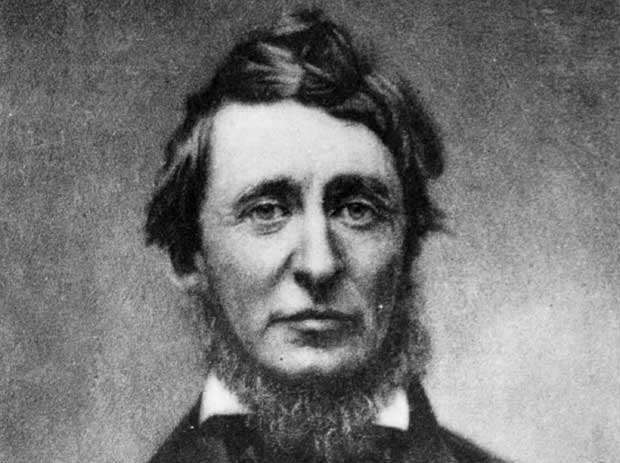
 In his essay “Civil Disobedience,” Henry David Thoreau opens by saying, “I heartily accept the
motto, ‘That government is best which governs least’", and then clarifies that his true belief is “That government is best which governs not at all”. Thoreau considers civil disobedience a moral and social duty of American citizens. He defines civil disobedience as an act of consenting resistance, achieved by not obeying laws he considers to be hypocritical.
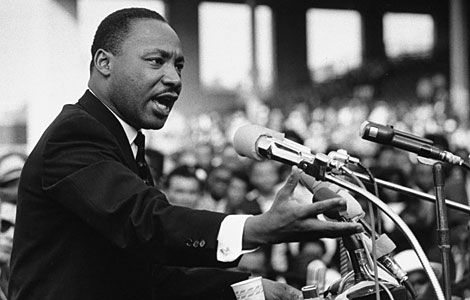
 "I have consistently preached that nonviolence demands that the means we use must be as pure as the ends we seek." So wrote Martin Luther King, Jr. in April 1963. King was offering a middle way, that addresses the unfairness of segregation but doesn't call for violent confrontation with the American government. However, he was not suggesting that nonviolent civil disobedience is a tactic that follows the rule of law but that, it acts outside the law. His strategy was to purposefully break laws that are unjust. The important point is that the tactics used by King’s movement for civil rights were successful, in the long-term, because they solved a situation that wasn't going away, using the revolutionary path advocated by Black Nationalists. He offered a simple choice: witness your country ripped in half and descend into chaos, or follow this middle path of reform and civil rights.
Gandhi famously said, “nonviolence is a weapon of the strong.” This
 statement means that nonviolence is a tactic best used by protest and resistance movements that are in a position of strength. King’s civil rights movement, similarly to Gandhi’s independence movement, found itself in a position of strength—and in fact drew strength from the more militant Black Nationalists.

To me, Aude-Marie, Civil Disobedience is purposefully breaking an unjust law to have it revoked. It is the people using their power to overthrow a government's unjust judgement.
http://theindependent.ca/2014/01/20/dr-martin-luther-king-strategies-and-tactics-of-civil-disobedience/#sthash.qg4u7ZZd.dpuf
Thursday, May 12, 2016
Introduction
Civil disobedience is an important element of American History that has been utilized in many aspects of social change throughout the centuries. Also known as passive resistance, it is a form of protest against a government or organization in which the one protesting refuses to abide by a law that is contrary to his/her beliefs, while also refusing to engage in violent behavior to correct the injustice. As students, our task for this project is to research one of those instances of social change and create an info-graphic (physical or online) to share your knowledge of civil disobedience.
My partner, Max Mulhall and I chose to write about a woman in Saudi Arabia who chose to write. There, it is culturally unacceptable for women to drive so this lady put herself in danger by breaking the unwritten rule. Here is more information on the subject:
https://www.youtube.com/watch?v=vNpmq6Ok-QQ
Let's get started!
https://www.youtube.com/watch?v=vNpmq6Ok-QQ
Subscribe to:
Posts (Atom)